
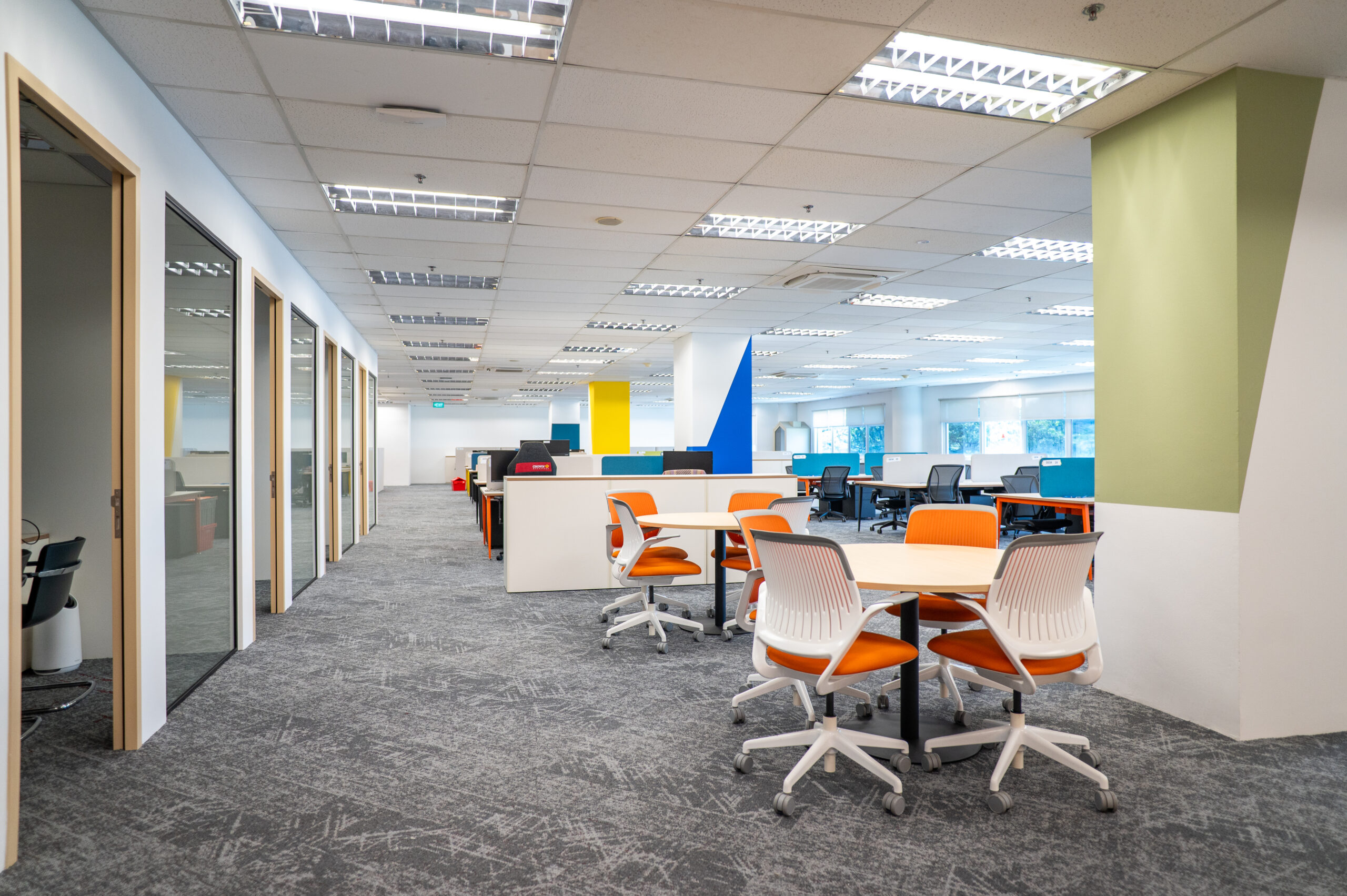
The contemporary workplace environment is constantly evolving. Office interior design is increasingly being driven by innovation, and the challenge of staying relevant hinges on understanding how people work, learn and collaborate in the physical workspace.
What Influences Workplace Design?
A good office is not just one that is pleasing to the eye. Rather, it’s one that can enable performance, collaboration, and cultural connection.
Thus, the following key areas of knowledge must be considered in office interior design:
- Behavioural psychology
How well co-workers interact or how motivated staff are can be affected by small design elements such as layout, light and noise. A well-designed workplace can also contribute to reducing stress and cognitive load. - Workplace technology
Gone are the days when running LAN cables to every workstation was a standard assumption in office renovation projects. In this new era of cloud platforms, wireless networking and mobile devices, work can be performed seamlessly in more flexible environments. - Sustainability science
Office interiors increasingly prioritise materials that reduce environmental harm or carbon footprint, such as using recycled wood, and repurposing existing furniture and fittings. Efforts to conserve energy include maximising natural daylight and using energy-saving lighting.
- Organisational culture
How an office is designed can subtly communicate whether collaboration is valued, whether organisational hierarchy is dominant or whether experimentation is welcome. For example, glass walls installed for meeting rooms signal openness and shared project spaces encourage collective ownership.
- Hybrid work practices
Does the office need to be fitted with enough workstations for the entire staff headcount, even when employees work remotely on certain days? Or should more spaces be repurposed to foster shared experiences, teamwork, and a sense of belonging beyond what a home office can offer? Such considerations become de rigueur in this age of hybrid work, when office spaces align more with human motivation, rather than just operational efficiency.
How can Singapore businesses adopt innovative workplace design?
Singapore businesses can adopt innovative workplace design by aligning spatial planning, technology, sustainability, and culture with the country’s evolving work practices and constraints such as limited space, high real‑estate costs, and a hybrid workforce.
Much as creating a visually striking office is important, local organisations need to reimagine space as a strategic asset that serves as a destination for teamwork and culture, not just individual work. Improving space utilisation is crucial to reducing operating costs and boosting return on investment.
Aligning the work environment with modern work patterns also helps to boost employee morale, thus contributing to improved employee retention – a critical lever for Singapore businesses navigating ongoing manpower constraints.
Great content! Keep up the good work!